Lunar Eclipse 2026: Everything About This Year's Two Eclipses and When to See the Next One
Written By
Sam Mishara
This article summarizes publicly available astronomical data for informational purposes. Eclipse times and visibility can vary slightly by source and location — always check a dedicated astronomy site or app for exact local timing before planning to watch.
Key Takeaways
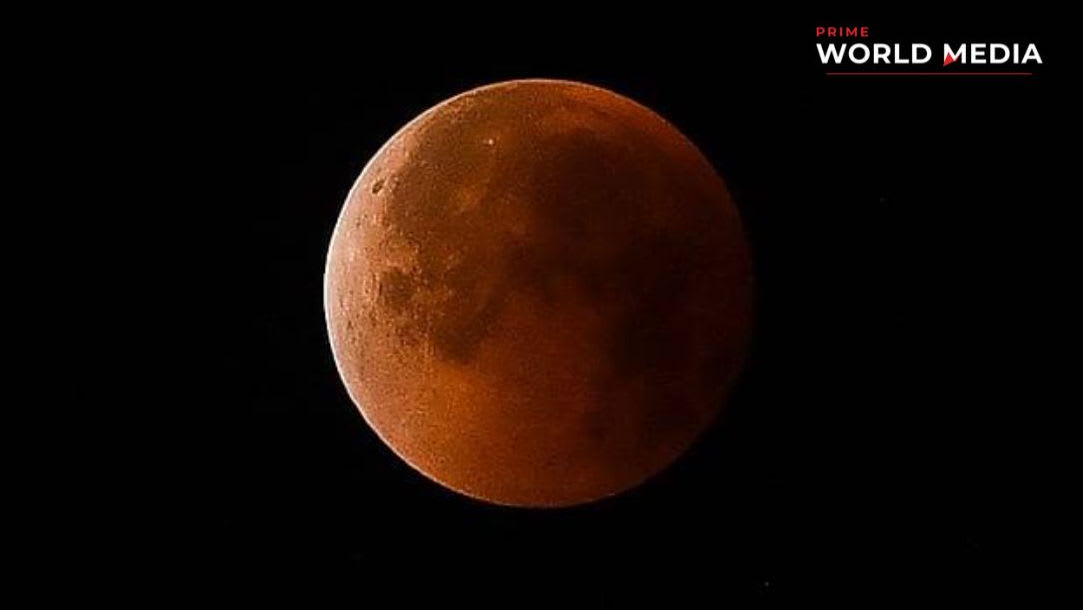
- 2026 has exactly two lunar eclipses: a total lunar eclipse ("blood moon") on March 3, and a deep partial lunar eclipse on August 27–28 that came remarkably close to totality, with roughly 96% of the Moon's disk passing into Earth's shadow.
- The March 3 total eclipse was visible across the Americas, eastern Asia, Australia, and the Pacific, with totality lasting about 58 minutes.
- The August 27–28 partial eclipse was visible from the Americas, Europe, Africa, and western Asia, and was the deepest, most dramatic-looking lunar eclipse anywhere on Earth until a total eclipse arrives in late 2028.
- Unlike a solar eclipse, a lunar eclipse is completely safe to watch with the naked eye — no special glasses or filters are needed at any point.
- The next lunar eclipse after 2026's pair is a penumbral eclipse on February 20, 2027 — a subtle event — with the next total lunar eclipse widely visible from North America not arriving until June 25–26, 2029.
What a lunar eclipse actually is
A lunar eclipse happens when Earth moves directly between the Sun and a full Moon, casting its shadow across the lunar surface. That shadow has two distinct parts: the umbra, Earth's dark inner shadow where sunlight is completely blocked, and the penumbra, the lighter outer shadow where the Sun is only partially covered. How much of the Moon passes through each part of that shadow determines what kind of eclipse observers actually see — a total eclipse, when the entire Moon passes through the umbra; a partial eclipse, when only part of it does; or a penumbral eclipse, when the Moon only grazes the outer, lighter shadow and dims subtly rather than turning the deep red or orange color people associate with a "blood moon."
That reddish color during a total or deep partial eclipse comes from sunlight bending through Earth's atmosphere and reaching the Moon indirectly — the same physical process that makes sunsets appear red — with the exact shade depending on atmospheric dust, recent volcanic activity, and other conditions circling the globe at the time.
March 3: 2026's total lunar eclipse
The first of 2026's two lunar eclipses was a total lunar eclipse on March 3, with totality — the period when the entire Moon sat inside Earth's dark umbral shadow — lasting approximately 58 minutes. This event was visible across a wide swath of the globe, including the Americas, eastern Asia, Australia, and the Pacific region, making it one of the more widely observable total lunar eclipses in recent years. Because the Moon passed through the southern half of Earth's umbra during this particular eclipse, observers reported the lower half of the eclipsed Moon appearing noticeably brighter than the rest of the lunar disk — a detail tied to exactly how the Moon's path intersected the shadow's geometry.
August 27–28: the deep partial eclipse that almost reached totality
2026's second lunar eclipse, on the night of August 27 into the early morning of August 28, came dramatically close to totality without technically reaching it. At the moment of greatest eclipse, roughly 96% of the Moon's disk sat within Earth's umbral shadow — close enough that the Moon likely still displayed the reddish or coppery coloring associated with a full "blood moon," even though a sliver of the lunar disk technically remained outside the darkest part of the shadow. This event was visible across the Americas, Europe, Africa, and western Asia, with the full eclipse process, from first to last shadow contact, lasting more than five hours, though the clearly visible partial phase lasted roughly three and a half hours.
Astronomers specifically flagged this event in advance as the most visually dramatic lunar eclipse anywhere on Earth until a total lunar eclipse finally returns on December 31, 2028 — a detail that made the August event something of a "last call" for eclipse watchers hoping for a striking blood-moon display without waiting several more years.
When is the next lunar eclipse?
For anyone who missed both of 2026's eclipses or wants to plan ahead, the next lunar eclipse on the calendar is a penumbral eclipse on February 20, 2027. Penumbral eclipses are the least visually dramatic type — the Moon only passes through Earth's lighter outer shadow, producing a subtle dimming that's genuinely difficult for a casual observer to notice without comparing photos taken before and during the event.
For a more visually striking event, the wait is considerably longer. The next total lunar eclipse widely visible across North and South America won't arrive until June 25–26, 2029, though Alaska and far-western Canada will get an earlier total lunar eclipse on New Year's Eve 2028. That multi-year gap reflects the genuinely irregular rhythm of lunar eclipses — 2026's two eclipses in one year is actually a relatively active stretch compared to the longer quiet periods that can follow.
How to actually watch one safely
One of the most reassuring facts about lunar eclipses, especially for anyone used to the strict safety warnings around solar eclipses, is that they require absolutely no special equipment or eye protection. Because you're simply watching sunlight reflected off the Moon rather than looking directly at the Sun, a lunar eclipse is completely safe to view with the naked eye from start to finish — no eclipse glasses, no solar filters, no special camera equipment required, though a pair of ordinary binoculars or a small telescope can enhance the view of the color and texture changes as the eclipse progresses.
The only real planning consideration is location and timing: checking your local moonrise time relative to the eclipse's start is important in some cases, since the earliest stages of an eclipse can occur before the Moon has actually risen above your horizon depending on where you are and which time zone you're in.
Frequently Asked Questions
How many lunar eclipses happen in 2026? Two — a total lunar eclipse on March 3 and a deep partial lunar eclipse on August 27–28, with no penumbral lunar eclipse occurring in 2026.
Do I need special glasses to watch a lunar eclipse? No. Unlike a solar eclipse, a lunar eclipse is completely safe to view with the naked eye at every stage, since you're looking at reflected sunlight on the Moon rather than at the Sun itself.
When is the next total lunar eclipse after 2026? The next total lunar eclipse arrives on December 31, 2028, visible from Alaska and far-western Canada. For the rest of North and South America, the next widely visible total lunar eclipse isn't until June 25–26, 2029.
Why do some lunar eclipses look red, while others barely change the Moon's appearance at all? It depends on the type of eclipse. Total and deep partial eclipses, where most or all of the Moon passes through Earth's dark umbral shadow, typically produce the reddish "blood moon" effect from sunlight refracting through Earth's atmosphere. Penumbral eclipses, where the Moon only passes through the outer, lighter shadow, cause only a subtle dimming that's easy to miss entirely.
Sources & References
- Sky & Telescope, "Solar and Lunar Eclipses in 2026"
- NASA, "Eclipses During 2026"
- NASA Scientific Visualization Studio, "August 27-28, 2026 Deep Partial Lunar Eclipse"
- Space.com, "Partial lunar eclipse August 27-28 — A complete guide to the 96% 'blood moon'"
- Almanac.com, "August 2026 Lunar Eclipse: When and Where to See It"
- Next-Eclipse.com, "Lunar Eclipse 2026 — Complete Calendar, Visibility & Times"
- TimeAndDate.com, "Next Eclipses in the United States"
Sam Mishara
Sam Mishara is a regular contributor and industry expert at Prime World Media, covering market innovations and leadership strategies.